Why Hidden Leaks Are Especially Risky in Santa Monica
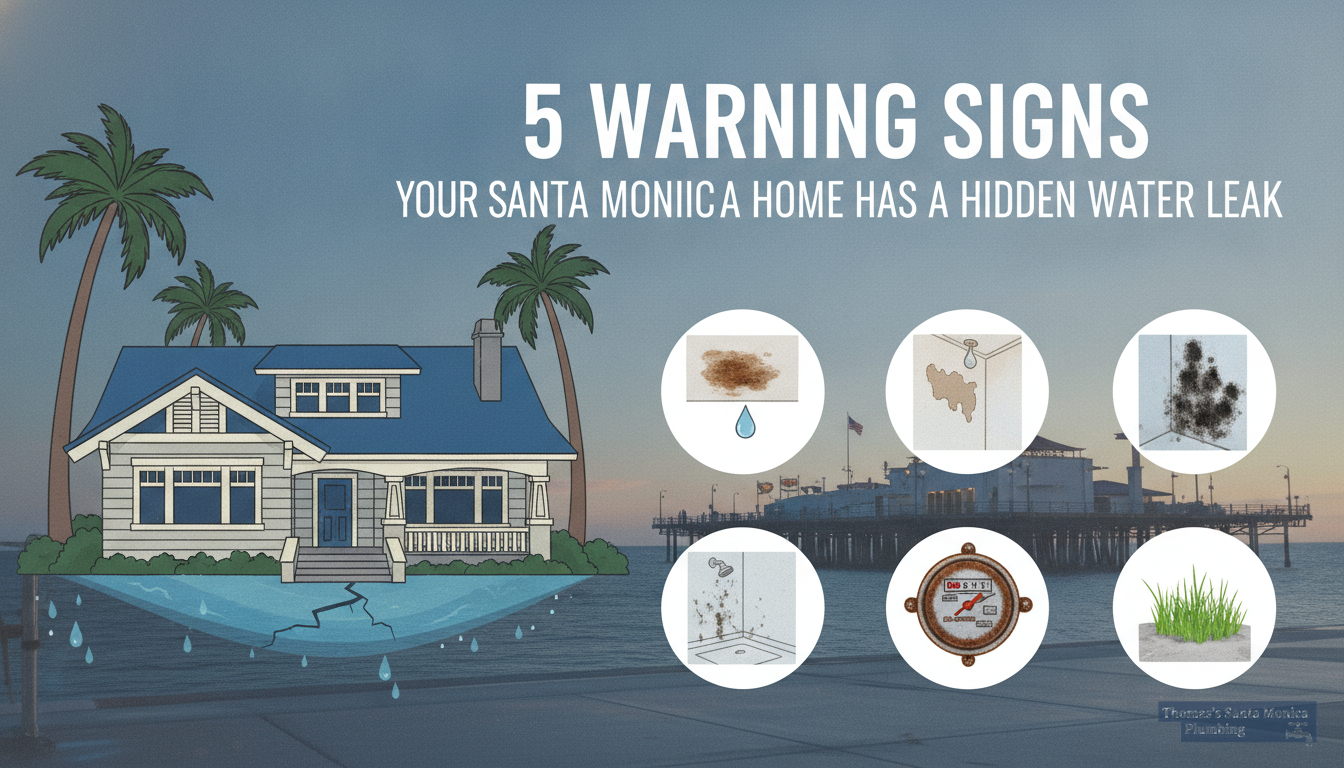
Santa Monica's coastal climate, aging housing stock, and older pipe materials create a perfect environment for leaks to develop — and hide — for months before causing visible damage. Whether you live in a 1940s craftsman bungalow in Sunset Park or a modern condo on Wilshire Boulevard, understanding the early warning signs of a hidden water leak can save you thousands of dollars in repairs and mold remediation.
At Thomas's Santa Monica Plumbing, we use non-invasive acoustic detection and thermal imaging to find leaks behind walls, under slabs, and inside ceilings without unnecessary demolition. Here are the five most common signs our technicians see before a small leak becomes a major disaster.
1. Your Water Bill Has Spiked Without Explanation
If your LADWP bill has crept up over the past one to three billing cycles and your household habits haven't changed, an active leak is one of the first things to investigate. A slow slab leak or a pinhole in a supply line behind drywall can waste thousands of gallons per month — all of it metered and billed to you.
A quick test: turn off every fixture and appliance in the house, then check your water meter. If the dial is still moving, water is flowing somewhere it shouldn't be. Call us immediately for a same-day leak detection and repair visit.
2. Warm or Damp Spots on Your Floors
Walking across a tile or hardwood floor and noticing an unexplained warm patch is a classic symptom of a slab leak — a break in a hot-water supply line running beneath your concrete foundation. As hot water escapes under pressure, it heats the slab from below and eventually warms the finished flooring above.
Damp or soft spots on carpet, especially in rooms far from any appliance, can signal the same problem. Santa Monica properties built before 1970 are particularly susceptible because copper pipes of that era are now approaching the end of their service life and are vulnerable to corrosion from soil movement and electrolytic activity along the coast.
3. The Sound of Running Water When Everything Is Off
If you lie awake at night and hear a faint hissing or dripping sound — but every faucet, toilet, and appliance is off — that sound is water escaping through a crack or joint somewhere in your plumbing system. This is especially worth investigating if the sound seems to come from the floor or the base of your walls rather than from a fixture area.
Our electronic acoustic listening devices can pinpoint the source of that noise without opening a single wall, so you know exactly where to make the repair before any demo work begins. Learn more about how our leak detection process works.
4. Mold Spots or Musty Odors in Unlikely Places
Mold needs three things: organic material, warmth, and moisture. A slow leak behind drywall provides all three — and the mold that grows there often stays hidden until it's a significant colony. If you notice a persistent musty smell in a bathroom, closet, or hallway that doesn't improve with ventilation, or if you see dark discoloration appearing at the base of a wall, a leak behind that surface is a serious possibility.
Early detection is critical because mold remediation costs can eclipse the plumbing repair itself. The sooner you call, the less of your wall we'll have to open. We serve homes throughout Santa Monica and nearby neighborhoods including Venice and Mar Vista where older bungalow construction makes this issue especially common.
5. Cracks in Your Flooring, Tile Grout, or Baseboards
Concrete slabs expand slightly when water flows beneath them and warms the foundation. Over time, this thermal movement can crack tile grout lines, cause hardwood planks to buckle, or create gaps between baseboards and the floor. These structural symptoms appear slowly, so many homeowners attribute them to normal settling — especially in older homes.
If you notice these cracks appearing in a pattern rather than at a single stress point, and especially if they coincide with any of the other signs above, a slab leak is a likely culprit. Our team will perform pressure isolation tests to confirm the source before recommending repair options that range from spot repair to sewer line inspection if the leak is closer to the drain side of your system.
What to Do If You Suspect a Leak
Don't wait to see visible water damage before calling a plumber. The cost of leak detection is a fraction of the cost of repairing water-damaged subfloors, drywall, and mold. Thomas's Santa Monica Plumbing is available Monday through Sunday
Confirm Availability
Call +14244476023 or fill out our online form for a free, no-obligation quote.
Request Free Quote